






British Steel Is Now Government Owned, But the £1.3 Million a Day Question Isn’t Solved Yet
Reviewed and last updated on July 16, 2026 by admin
The UK government has officially taken British Steel into public ownership as of 16 July 2026, ending five years of Chinese ownership under the Jingye Group. But while ministers are calling it a historic day for British manufacturing, the numbers suggest the hard part is only just beginning.
What actually happened
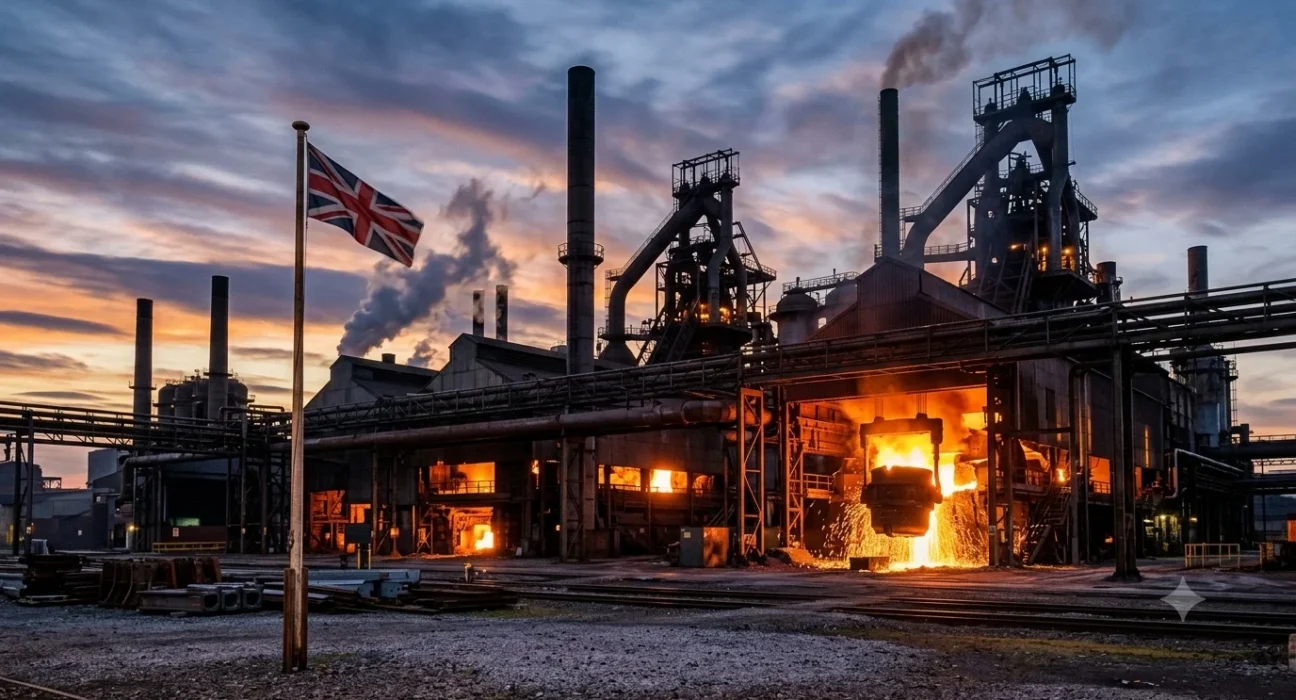
The takeover became legally effective the moment the Steel Industry (Nationalisation) Act 2026 received Royal Assent on 15 July, with Industry Minister Chris McDonald signing the regulations to complete the transfer the same day, according to the official government announcement. The move centres on British Steel’s Scunthorpe site in Lincolnshire, home to the UK’s last blast furnaces capable of producing virgin steel from iron ore.
Business Secretary Peter Kyle framed it plainly, British Steel now belongs to the British people, and our focus is on the future, stabilising the business, backing the communities that rely on it and building a sustainable, competitive and decarbonised steel sector.
This isn’t a sudden decision. The government first stepped in during April 2025, recalling Parliament on a Saturday to stop Jingye closing the blast furnaces outright, a move that would have wiped out Britain’s last domestic source of primary steel and put roughly 4,000 jobs at risk. For the 15 months since, officials have run the site’s operations while Jingye remained the legal owner. That arrangement has now ended.
The bill nobody’s talking enough about
Here’s the part that’s easy to miss in the celebratory headlines, keeping Scunthorpe running has reportedly cost the government around £1.3 million a day since it took operational control, according to figures from the National Audit Office cited by Eastern Eye. Multiplied across 15 months, that’s a substantial sum of public money spent before the nationalisation even became official.
And the spending doesn’t stop with ownership. Scunthorpe’s blast furnaces are ageing, and the government’s own Steel Strategy, launched in March 2026, commits to moving toward decarbonised green steel production. That likely means replacing the blast furnaces with electric arc furnaces, a project industry estimates put at well over £1 billion.
Simon Boyd, managing director of structural steel manufacturer Reid Steel, put it bluntly, government intervention had become unavoidable, but any financial return on the investment could take 10 to 20 years.
What Jingye gets out of this
Ownership changing hands doesn’t end the story for the previous owner. Under the Act, the government must now appoint an independent valuer to determine whether Jingye is owed compensation and Jingye has already signalled, in UK filings and on its WeChat account, that it considers British Steel a valuable asset deserving significant payment. That’s a notable position for a company that had been prepared to walk away from the site rather than keep it running. The compensation scheme is expected to be set out through further regulations in autumn 2026, so this dispute is far from resolved.
Why this matters beyond Scunthorpe
Steel isn’t just another industry, it underpins infrastructure, defence, and construction supply chains, which is exactly the justification ministers have used. Losing Britain’s only virgin steel capacity would have meant relying entirely on imports for a material considered a matter of national security. That’s the strategic logic behind a Labour government choosing full nationalisation over continuing to search for a private buyer, an option it had reportedly been pursuing before deciding public ownership was the only workable route.
The near-term priorities for the newly appointed leadership team are straightforward on paper, stabilise operations, maintain production, work with unions, but the underlying question is one of economics, can Scunthorpe ever become commercially self-sustaining, or is this now a permanently subsidised strategic asset? Reid Steel’s 10-to-20-year estimate suggests the government is betting on a long game, not a quick turnaround.
This article is compiled and written with AI assistance, drawing on reporting from GOV.UK, Sky News, Eastern Eye, and AOL UK, with editorial review before publication. Figures and quotes are linked to their original sources above.