





Louisa Kochansky: Why the Name Doesn’t Match a Real Author, and Who You’re Probably Looking For
Reviewed and last updated on August 1, 2026 by admin
If you’ve searched for Louisa Kochansky expecting to land on a straightforward author bio, you’ve probably noticed something odd. Every site tells a different story. One calls her a literary figure with two novels and a poetry collection. Another describes her as an entrepreneur and branding expert. A third gives her a vague small-town origin story that doesn’t match either. None of them cite a publisher, an employer, an award, or anything you could independently check.
That’s not an accident, and it’s not a case of an obscure writer who simply hasn’t been covered much. It’s what happens when a misspelled name picks up enough search traffic that content sites start manufacturing biographies to catch the clicks.
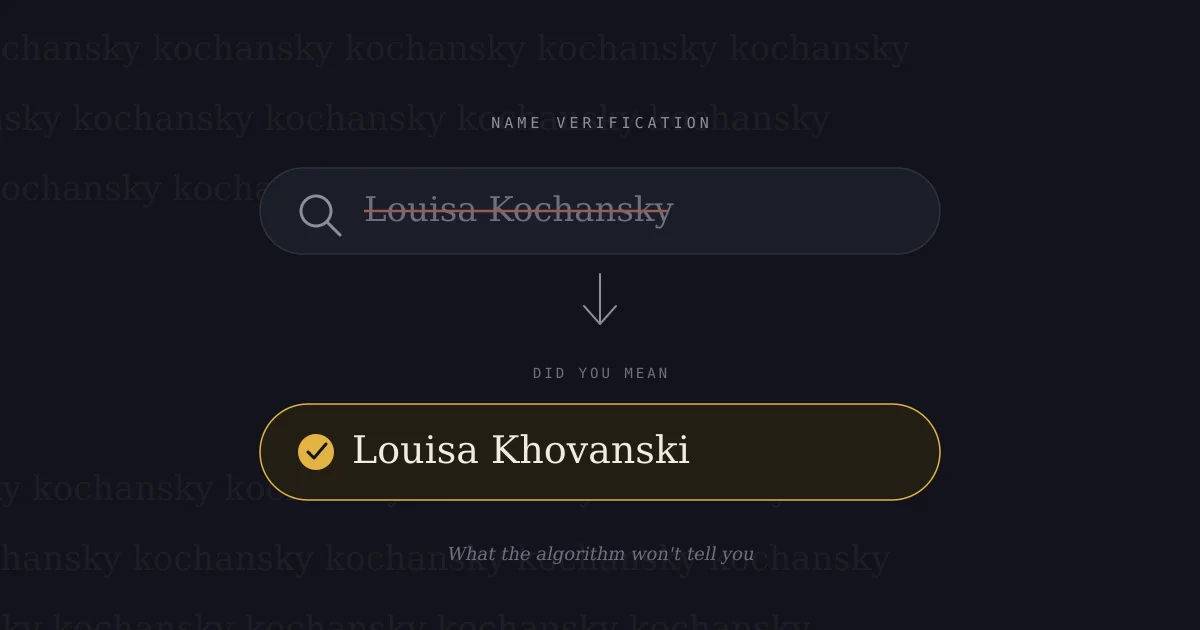
There’s no verifiable public record of an author, entrepreneur, or literary figure named Louisa Kochansky. What does exist, confirmed through her own public statements, is Louisa Khovanski, a Ukrainian-born photographer and content creator with several million followers across Instagram, YouTube, and Twitch. Kochansky appears to be a common misspelling or mishearing of Khovanski, and the search-driven biography sites appear to have built an entirely fictional literary persona around the misspelling rather than correcting it.
What’s Actually Confirmed About Louisa Khovanski
In a published interview, Khovanski described her own background directly, which makes it a meaningfully stronger source than a recycled bio page. She said she started out working as a photographer, later expanded into modeling and content creation around 2019, and now works as a model, photographer, YouTuber, blogger, and Twitch streamer. She’s originally from Ukraine and relocated to Canada after her hometown came under occupation during the war. She currently has an Instagram following in the millions, split across a personal account and a separate page for her photography work.
That’s the reliable core. A few other claims circulate that I’d treat with real caution: her exact birth date, height, and net worth appear only on low-effort biography sites that don’t agree with each other. One site lists three different age estimates in three different paragraphs of the same article. When a number can’t be traced to Khovanski’s own statements or a credible outlet, it’s a guess dressed up as a fact, and it doesn’t belong in a trustworthy profile.
Two Other Real People, Same Rough Spelling
The name collision runs in more than one direction, which adds to the confusion.
Lukas Kochansky is a real, unrelated person: a singer-songwriter and multi-instrumentalist from the Philadelphia area, currently headed into Berklee College of Music’s incoming class. His own site and social pages confirm his background in guitar, bass, and classical vocal training. He has no connection to Khovanski or to the fictional literary-Louisa pages.
There’s also a private individual with a closely related surname spelling who appears to be a law student in Europe, based on a professional networking profile. She isn’t a public figure, so I’m not going to detail her further here. If a search led you to her by accident, the honest answer is simply that the name is close but not the same, and she doesn’t belong in a public biography piece.
| Name variant | Who it actually points to | Confidence |
|---|---|---|
| Louisa Kochansky (writer/entrepreneur) | No real person found | Fabricated |
| Louisa Khovanski | Ukrainian-Canadian photographer and content creator | Confirmed via her own interview and public accounts |
| Lukas Kochansky | Philadelphia singer-songwriter, Berklee-bound | Confirmed via his own website |
| Louisa Kochanski (alt. spelling) | Private individual, unrelated field | Exists, but not a public figure |
How a Fake Biography Gets Built
It’s worth walking through the mechanism, because it explains why the results look so polished and so wrong at the same time.
A name gets typed into search engines often enough, usually because it’s a plausible misspelling of someone who’s actually famous, and a gap opens up: there’s search demand but no matching page. Content sites exist to fill exactly that gap. Rather than pointing searchers to the correct name, some of them generate a biography from scratch, complete with an invented childhood, a writing style description, book titles, and a table of quick facts. Because the underlying person doesn’t exist, every site invents slightly different details, which is exactly the inconsistency that tipped this off in the first place.
One of the sites making this claim is particularly easy to catch in the act: the image file powering its biography photo is literally named after the AI tool that generated it, embedded right in the page’s own code. It isn’t a photo of anyone. It’s an illustration built to accompany a person who was never real to begin with.
This isn’t unique to Louisa Kochansky. The same publishing pattern turns up across a whole catalog of similar name-adjacent pages: sound-alike names, misspelled celebrities, and search terms that read like real biographical queries but resolve to nobody in particular.
If You’re Trying to Find Louisa Khovanski
Search using the correct spelling, Khovanski, rather than Kochansky. Her main public accounts identify her consistently under that name, including a dedicated photography-focused account separate from her main profile. If a page claims to be about Louisa Kochansky and describes a completely different profession, book titles, or life story, treat it as unrelated content riding on the misspelling rather than a source about her.
The Practical Takeaway
If you came looking for a writer named Louisa Kochansky, that specific person doesn’t appear to exist in any documented, checkable form. If you came looking for the content creator whose name sounds similar, Khovanski is almost certainly who you want, and there’s real, source-backed information about her, just not the exaggerated or invented kind that shows up on most of the pages using her name’s misspelling.
The broader lesson travels well beyond this one name: a polished layout, a quick-facts table, and a confident tone aren’t evidence. When five sites agree on a detail, check whether they’re actually five independent sources, or one fabricated claim that’s been copied five times.